Why Property Maintenance in Hull Is Key to Long-Term Home Health
A healthy home rarely stays healthy by accident. It stays that way because someone notices the first cracked seal around a window, the slipped roof tile after a winter gale, the faint tide mark behind the washing machine, the gutter joint that has started to drip onto brickwork. Those details look small when they first appear. Left alone, they become the sort of problems that drain budgets, damage structures, and turn otherwise solid houses into stressful places to live.
That is especially true in Hull. Homes here deal with conditions that test a building over time. Wind-driven rain, cold snaps, damp air, older housing stock in many neighbourhoods, and the wear that comes from everyday use all have a way of exposing weak spots. Property maintenance is not a cosmetic exercise or a box-ticking routine. It is the ongoing work that protects the structure, preserves comfort, and gives homeowners a better chance of avoiding major repair bills later.
People often spend more time thinking about renovation than maintenance because renovation feels visible and rewarding. A new kitchen gets attention. Fresh plaster and new flooring feel transformative. Yet maintenance is what keeps those improvements from being undermined. If you invest in Property Renovation Hull projects but ignore the roofline, drainage, ventilation, or external envelope, the finish can start failing long before it should.
Homes fail gradually before they fail dramatically
Very few serious building problems begin as dramatic events. Most start quietly. Moisture gets behind render through a hairline crack. A blocked gutter keeps soaking one General Contractor Hull section of wall. Sealant around a bath shrinks, water reaches the subfloor, and timber starts to soften. Loft insulation becomes compressed in one area, condensation forms in colder months, and mould appears in corners that never used to have it.
By the time a homeowner spots obvious damage, the issue has often been developing for months or even years. That is why regular attention matters so much. You are not simply fixing what is broken. You are interrupting the chain of events that turns a manageable defect into a large and expensive one.
I have seen this pattern play out repeatedly in ordinary homes. A small leak from an overflowing gutter can look harmless, especially if it only appears during heavy rain. But if that overflow runs down the same patch of wall all winter, the brickwork can stay saturated. Mortar joints weaken, internal plaster starts to show staining, and frost can worsen any exposed areas outside. What could have been solved with a minor gutter repair and a cleanout turns into repointing, internal redecoration, and sometimes joinery work if nearby timber is affected.
Hull’s climate makes maintenance more than a seasonal chore
Hull’s location and weather patterns place particular pressure on buildings. You do not need extreme conditions for damage to happen. Persistent exposure is enough. Repeated rain, strong winds, and the kind of damp cold that settles into walls and roof spaces can challenge even well-built properties.
Older terraced houses, semis, and post-war homes each have their own vulnerabilities. Older brick homes may need careful repointing with compatible materials rather than hard modern fixes that trap moisture. Mid-century houses can hide ageing pipework or dated electrics behind surfaces that still look acceptable. Newer homes are not immune either. They may be more airtight, which can improve energy performance, but they can also suffer quickly if ventilation is poor or if small installation defects are left unresolved.
What matters is not whether a home is old or new. What matters is whether it is being observed, maintained, and repaired with some understanding of how buildings behave over time.
A coastal or near-coastal environment tends to punish neglected exteriors. Paint finishes wear faster. Exposed timber can deteriorate if coatings fail. Metal fixings and fittings may corrode more quickly than homeowners expect. Small maintenance jobs outdoors often make the biggest difference because the building envelope is your first line of defence. Once water and cold air start getting past that line, internal problems follow.
Moisture is usually the real enemy
Ask most experienced tradespeople what causes the most long-term damage in homes, and moisture will be near the top of the list every time. Not because every house has a major leak, but because moisture exploits weaknesses from so many angles. It gets in from above through roofing defects, from the side through failed pointing or render cracks, from below through poor drainage or bridging, and from inside through condensation and hidden plumbing leaks.
Homeowners sometimes think of damp as one issue, when really it is a family of issues that need different responses. Penetrating damp from a failed external detail is not solved the same way as condensation caused by poor airflow. Rising damp is often misidentified. A musty smell in a bedroom corner might be a ventilation problem, a cold bridge, a roof defect, or a gutter issue. Guesswork wastes money.
This is where regular, skilled property maintenance earns its value. It narrows down cause before money is spent on treatment. Good maintenance does not just patch symptoms. It asks why the symptom appeared there, in that room, on that wall, at that time of year.
In Hull, where winter humidity and low temperatures can linger, condensation becomes a common complaint. Sometimes the answer is simple, such as upgrading extractor fans, improving trickle ventilation, or changing chmyorkshireltd.co.uk Bathroom Remodeler how heated air moves through the home. Sometimes it is more involved, especially in houses where insulation upgrades were done unevenly or where older windows were replaced without considering ventilation balance. The best results come from treating the house as a system, not as a collection of isolated surfaces.
Maintenance protects renovation budgets
There is a hard truth that homeowners do not always hear before they start upgrading a property. The finish is only as reliable as what sits behind it. A beautifully renovated room can hide defective pipework, uneven floors, tired electrics, or unresolved damp. If those basics are not addressed first, the attractive part of the job may have a short life.
That is one reason a capable general contractor will often spend more time than expected discussing hidden risks before work begins. It can sound cautious, even inconvenient, when a contractor insists on checking roof condition, external walls, drainage, ventilation, or subfloors before signing off on interior work. In practice, that caution is what saves clients from paying twice.
A sensible Property Renovation Hull approach starts with maintenance logic. Secure the roof. Make sure rainwater goods work properly. Check external fabric. Understand moisture movement. Confirm electrical and plumbing systems are sound. Then improve finishes. Not the other way round.
I have seen clients frustrated when money had to be diverted from cosmetic upgrades into less visible repairs. Most of them later admitted it was the right call. One homeowner planned to replace flooring throughout the ground floor, but a routine inspection found a slow historic leak near the kitchen and poor ventilation beneath part of the suspended floor. It was not catastrophic, but sections of timber were already beginning to degrade. Had the new floor gone down first, that hidden problem would have continued until the fresh installation had to be lifted again. Spending a few thousand pounds on the unglamorous work first avoided a much larger bill later.
The true cost of neglect is rarely the first repair
People often compare maintenance costs to doing nothing, as if the choice is between spending money now or saving money now. That is not the real comparison. The real comparison is between controlled spending and reactive spending.
Controlled spending tends to be planned, targeted, and competitively priced. Reactive spending usually arrives at the wrong time. It may happen during a spell of bad weather, when access is harder and temporary protection is needed. It may involve emergency callouts, secondary damage, accommodation disruption, insurance complications, or repeated redecoration. Once a defect spreads from one building element to another, the cost multiplies.
A cracked tile may be a small roofing repair. A leak that follows can damage felt, battens, insulation, plasterboard, and decoration. A failed mastic joint around a shower tray costs little to replace. Ongoing leakage can damage plaster, skirting, flooring, and the ceiling below. One failed pointing area on a chimney stack may be simple to fix in dry weather. If ignored, it can lead to internal staining, loose masonry, and a more substantial scaffolded job.
Maintenance is often described as an expense. In practice, it is risk management. You are paying relatively modest sums to reduce the chance of much larger losses.
Good maintenance depends on timing and judgment
Not every defect needs urgent intervention, and not every visible flaw signals a serious problem. That is where experience matters. A hairline shrinkage crack in plaster may be harmless. A stepped crack following mortar joints could deserve closer attention. Some blown render can wait for the right season if the substrate remains sound. A persistent leak around a roof penetration usually cannot.
This is why blanket advice is less useful than property-specific judgment. The best maintenance plans are based on condition, exposure, age, previous alterations, and occupancy patterns. A rental property with higher wear and more frequent turnover may need a different maintenance rhythm from an owner-occupied family home. A vacant property can deteriorate quickly because heating, ventilation, and observation are inconsistent. A recently renovated home may need a post-project check after its first full winter to catch movement, sealant shrinkage, or ventilation issues early.
If you work with a general contractor or maintenance team regularly, the quality of advice improves over time because they build familiarity with the property. They know which areas have a repair history, which rooms are prone to condensation, where movement has stabilised, and what previous owners altered. That history matters. Buildings tell stories, and recurring issues usually have a pattern.
The areas homeowners should never ignore
Some parts of a home consistently cause disproportionate trouble when maintenance slips. These are the areas worth checking first, especially in a climate like Hull’s:
- Roof coverings, flashings, and chimney details, because small failures here can let water in long before a ceiling stain appears.
- Gutters, downpipes, and drainage paths, because overflowing rainwater quietly saturates walls and foundations.
- Bathrooms and kitchens, because frequent water use exposes failed seals, hidden leaks, and ventilation weaknesses.
- External joinery, render, and pointing, because once protective finishes fail, weather starts working directly on the building fabric.
- Loft spaces and underfloor voids, because they often reveal leaks, condensation, insulation gaps, and timber issues before rooms below do.
None of those checks require panic. They require routine. Most expensive housing problems are not mysterious. They are just unnoticed for too long.
Energy efficiency and maintenance are closely linked
There is a tendency to separate energy performance from maintenance, but in real homes they overlap constantly. Drafts around doors and windows are often a maintenance issue. So are gaps in loft insulation, poorly sealed service penetrations, damaged extractor fans, or decayed external fabric that allows uncontrolled moisture and cold air into the building.
A house that is not maintained generally costs more to heat and is harder to keep comfortable. Occupants compensate by turning up the thermostat, using portable heaters, or opening windows to clear condensation from rooms that should be ventilated more effectively. That combination can drive up bills while never solving the underlying issue.
At the same time, maintenance needs to be balanced with building physics. Simply sealing every gap without thinking about ventilation can backfire, particularly in older homes. Better thermal performance is valuable, but not if it traps moisture indoors. This is another area where practical experience matters more than generic advice. The right approach might be improved extraction in wet rooms, loft insulation topped up to a sensible level, selective draught-proofing, and repair of damaged external elements, rather than a rushed package of measures that creates new condensation points.
For homeowners considering Property Renovation Hull work to improve efficiency, maintenance Bathroom Remodeler should come first and continue afterward. Insulation, new windows, upgraded heating, and improved finishes all perform better in a building that is dry, sound, and well ventilated.
Maintenance also protects property value, but that is not the main reason
Estate agents and surveyors notice neglect quickly. Staining, cracked exterior finishes, rotten joinery, mould, defective gutters, and tired roofs all shape how a buyer reads the rest of the property. Even if the defect is fixable, visible signs of poor upkeep make buyers assume there are hidden problems elsewhere. That can affect sale price, survey outcomes, and negotiation.
Still, resale value is only part of the picture. For most owners, the more immediate benefit is daily quality of life. A maintained home feels steadier. Rooms heat more evenly. Windows open and close properly. Bathrooms dry out faster. External doors seal. You are not waiting for every period of heavy rain with a low level sense of dread. There is real value in that, even if it never appears on a spreadsheet.
I remember one homeowner who had spent years putting off exterior repairs because the issues seemed tolerable. There was minor water ingress around one upstairs window, some flaking paint on fascias, and a recurring musty smell in the box room. None of it felt urgent. After proper maintenance was carried out, including joinery repairs, improved ventilation, and localized masonry work, the house simply felt different. Warmer, drier, quieter, easier to manage. The owner’s first comment was not about market value. It was that the home finally felt settled.
When to bring in a general contractor instead of separate trades
Some jobs are straightforward enough for a specialist trade on its own. A gutter clean, a boiler service, or a small patch repair may not require broader coordination. But bathroom remodel once a problem touches multiple parts of the building, piecemeal repair can become inefficient.
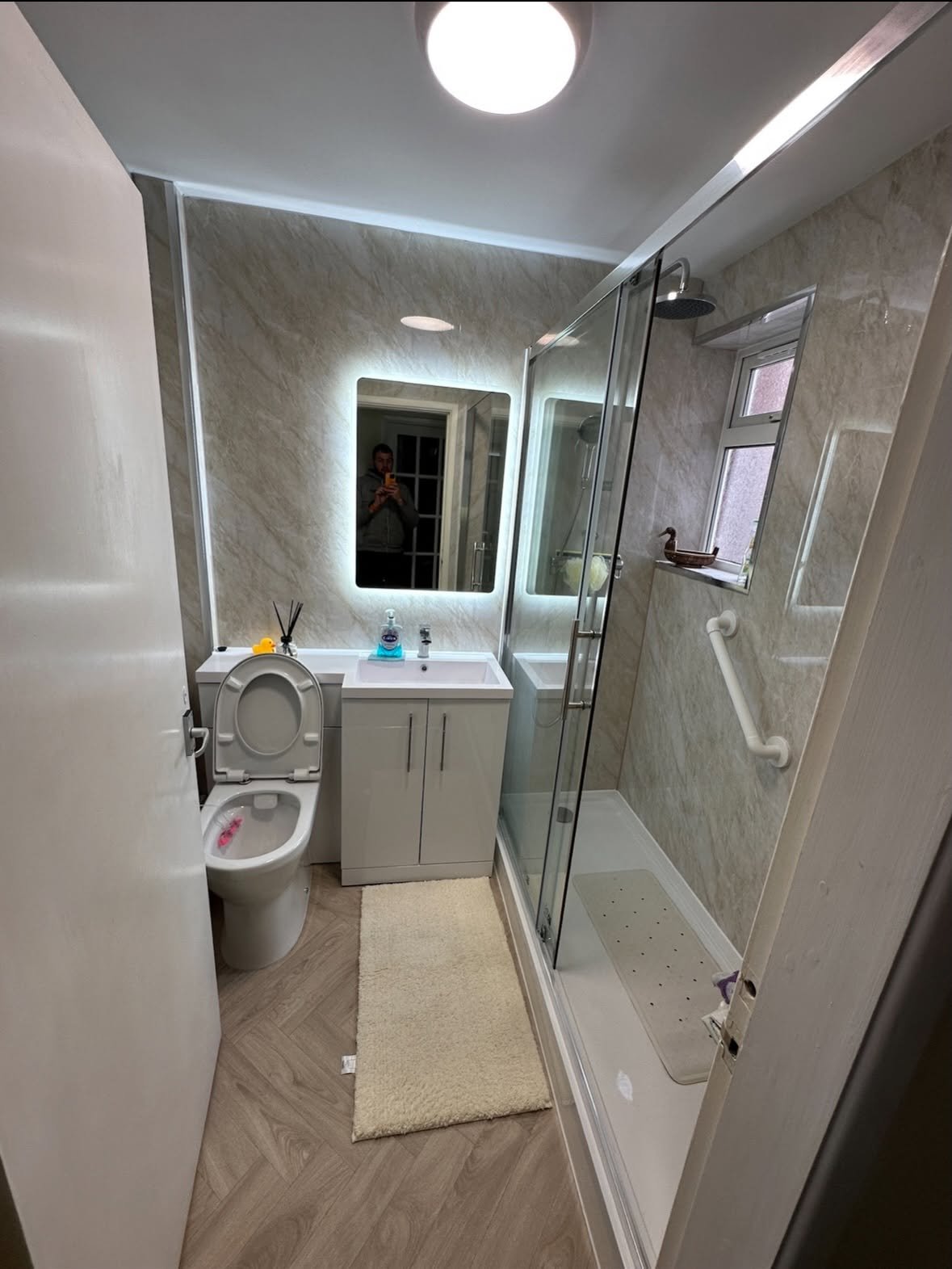
That is often the point where a general contractor becomes useful. If roof defects, internal staining, damaged plaster, and poor ventilation all appear in the same chain of problems, it helps to have one professional or one team looking at the whole picture. The same applies when maintenance overlaps with improvement work. For example, if you are replacing a bathroom, repairing hidden water damage, improving extraction, updating electrics, and redecorating, coordination matters as much as the individual tasks.
A good contractor does more than schedule trades. They sequence work sensibly, spot dependencies, and reduce the chance that one repair will be undone by another. They should also be realistic with you. Sometimes the right answer is a local repair. Sometimes the right answer is to step back and address a wider underlying issue while access is already available.
Homeowners can save money by doing that thinking once, rather than repeatedly paying for partial fixes. It is common to see the same wall stained and repainted more than once because nobody fully addressed the external cause. Maintenance becomes cheaper when diagnosis improves.
A practical rhythm for looking after a home in Hull
The strongest maintenance habits are usually simple. They are based on observation, seasonality, and acting before damage spreads. Most owners do not need a complicated schedule. They need consistency and enough professional input to catch what untrained eyes miss.
A sensible annual rhythm often looks like this:
- Check exteriors after winter and after major storms, especially roofs, gutters, pointing, render, and external paintwork.
- Review ventilation and signs of condensation in colder months, including extractor performance and mould-prone corners.
- Inspect bathrooms, kitchens, and utility areas for failed sealant, minor leaks, and soft spots around fixtures.
- Look in the loft and, where possible, under suspended floors for early signs of moisture, movement, pests, or insulation gaps.
- Bundle related repairs together where practical, rather than letting small defects accumulate across the year.
That rhythm does not eliminate surprises. Houses can still develop sudden faults. What it does is reduce the number of unpleasant ones.
The homes that age best are rarely the ones with the flashiest upgrades
When you look at properties that have held up well over decades, they usually share the same quiet strengths. The roof has been kept sound. Rainwater is taken away properly. Brickwork or render has been repaired before widespread failure. Timber has been painted before rot set in. Ventilation has not been ignored. Kitchens and bathrooms have not just been refreshed visually, they have been installed with care and checked over time.
Those homes may or may not have luxury finishes. What they almost always have is continuity of care.
That is the real case for Property Maintenance Hull homeowners should take seriously. It is not only about avoiding emergency callouts, and it is not just about preserving appearance. It is about keeping the building dry, stable, efficient, and healthy enough to support the people living inside it. Long-term home health comes from dozens of small, competent decisions made over the years. Miss enough of them, and even a good house starts to struggle. Stay on top of them, and a home in Hull can remain solid, comfortable, and resilient for a very long time.
CHM Yorkshire Ltd
Hull
HU9 5BU
Tel: 01482 455159
Website: https://www.chmyorkshireltd.co.uk